
Move-Out Cleaning When Utilities Are Shut Off: What Can and Cannot Be Done
Facing a move-out without active utilities is a challenge many tenants, landlords, property managers, and business owners encounter. Whether it’s water, power, or HVAC, utility shutoffs can make cleaning complicated right when you want your property to look its best. This in-depth guide walks you through everything you need to know about move-out cleaning when utilities are shut off: what’s possible, what isn’t, how professionals adjust, and practical checklists to ensure your space is ready, safe, and compliant for handover. Express Clean brings clarity on limitations, hygiene risks, creative solutions, and best practices to protect deposits and property value.
Understanding the Impact of Utility Shutoffs on Move-Out Cleaning
Having utilities cut off—such as water, electricity, or gas—dramatically affects your ability to restore the property to a move-out standard. Certain cleaning tasks rely on water for rinsing, electricity for powering cleaning equipment, and climate control for proper drying or protection against mold. Before attempting any cleaning, clarify which utilities are off to plan accordingly. Here’s why:
- Water Shutoff: Restricts mopping, wet wiping, toilet/bathroom cleaning, and washing appliances or floors.
- Electricity Shutoff: Limits vacuuming, lighting for inspections, running extractors, or safely spotting stains.
- Gas/HVAC Off: Can impact drying carpets, controlling humidity, and maintaining safety for chemical use.
Identifying these limitations upfront keeps your cleaning realistic and guides you to focus on tasks that are possible—and safe—without active utilities.
What Move-Out Cleaning Tasks Are Still Possible Without Utilities?
Despite restricted utilities, some core cleaning can still be accomplished. Professionals adapt checklists and techniques to maximize cleanliness given these constraints:
- Dry Dusting & Sweeping: Clean all surfaces, baseboards, shelves, and light fixtures with microfiber cloths and dusters.
- Dry Mopping: Use dry mops or electrostatic pads for floors that don’t require water.
- Spot Cleaning: With portable pre-moistened wipes or minimal bottled water (if safe), handle obvious fingerprints and grime.
- Trash & Debris Removal: Bag and haul out all garbage and unwanted items.
- Vacuuming: Only possible if the property still has electrical power—if not, focus on dry sweeping instead.
- Appliance Exteriors: Wipe refrigerators, ovens, and microwaves with prepared wipes if possible.
- Cabinets and Drawers: Empty, dust, and wipe using dry methods.
Focus on dry methods and avoid any process that requires running water or appliances. Communicate transparently with landlords about what can and cannot be achieved under these conditions.
Cleaning Tasks That Cannot Be Properly Done Without Utilities
Some vital move-out cleaning steps will be impossible, or unsafe, if utilities are off. These may include:
- Mopping Hard Floors: Without water, thorough mopping is not possible.
- Bathroom & Kitchen Deep Sanitization: Sinks, toilets, tubs, and counters can’t be fully sanitized without water or electricity.
- Stain Removal: Tasks requiring rinsing, water extraction, or machine scrubbing aren’t feasible.
- Oven & Refrigerator Interior Cleaning: Often needs water for rinsing or removal of cleaning agents.
- Carpet Cleaning: Water extractors or steam cleaners require both water and power.
- Window Washing: In-depth window and screen cleaning usually needs running water.
- Mold Remediation: Per EPA guidelines, effective mold cleaning depends on water, safety protocols, and sometimes ventilation systems.
Attempting these tasks without utilities may lead to incomplete cleaning or even property damage. Professionals will note these limits in their documentation.
The Risks of Cleaning with No Water or Power
Attempting to force wet cleaning or overlooked hygiene protocols without utilities can create several hazards:
- Potential mold growth if wet materials cannot be thoroughly dried.
- Ineffective disinfection, especially in kitchens and bathrooms, as proper CDC-recommended methods typically require active water and sometimes hot water (see CDC advice).
- Slip and fall hazards from incomplete rinsing or attempted mopping.
- Unintended damage to finishes or appliances if not cleaned per manufacturer standards.
If you can’t achieve move-out cleaning tasks safely due to shutoffs, document your efforts and notify all stakeholders promptly.
Legal, Lease, and Compliance Considerations
Chicago leases and property management agreements often mandate “broom clean” condition or specify which areas must be sanitized. When utilities are shut off before move-out, clarify:
- Tenant Responsibility: Are tenants obligated to keep water/power on until official move-out? Review your lease’s language.
- Inspection Protocols: Will the landlord perform a walk-through before deposits are returned? If cleaning is incomplete due to utilities, get written notes.
- Documentation: Take time-stamped photos and create an inventory of what cleaning was possible vs what was not due to utilities.
- Compliance: Facility managers need to consider OSHA and EPA requirements for safe, hygienic turnover.
Proactive communication is the best defense if a dispute arises over move-out cleanliness.
How Professional Cleaners Adapt When Utilities Are Off
Experienced cleaning companies like Express Clean adapt their protocol when faced with shutoff utilities. Here are strategies often used in these scenarios:
- Bring pre-filled water containers for minor spot cleaning (when permitted).
- Utilize battery-powered or manual equipment for sweeping and dusting.
- Focus on dry wiping high-touch areas and removing visible debris.
- Communicate with property stakeholders about what standards can be achieved—and what cannot.
- Document obstacles and leave detailed cleaning notes with before/after photos.
If your property or client requires services beyond what’s possible under these constraints, most companies will schedule a follow-up once utilities are restored.
Pre-Move Checklist: How to Prepare for Cleaning During Utility Shutoff
Whether you’re a tenant, property manager, or business owner, planning ahead streamlines the process when utilities will be unavailable. Here’s a practical checklist:
- Confirm utility shutoff dates and which services will be affected.
- Coordinate cleaning for the last possible day utilities are active, if feasible.
- Stock up on pre-moistened wipes, dry mops, and portable lighting (if needed).
- Notify your cleaning company or staff about the condition in advance.
- Document completed tasks and unachievable areas with photos for your records.
- Arrange a walk-through with the landlord or manager if possible before utilities are off.
This ensures everyone has clear expectations and reduces end-of-lease disputes.
Portable Solutions and Workarounds for Basic Hygiene
While you can’t fully replace running water or power, these workarounds help maintain a basic level of hygiene:
- Use ready-to-use disinfectant wipes for surfaces, handles, and counters.
- Prepare a limited amount of clean water for spot wiping crucial areas (sinks, fixtures).
- Bring manual sweepers or brooms for hard floors.
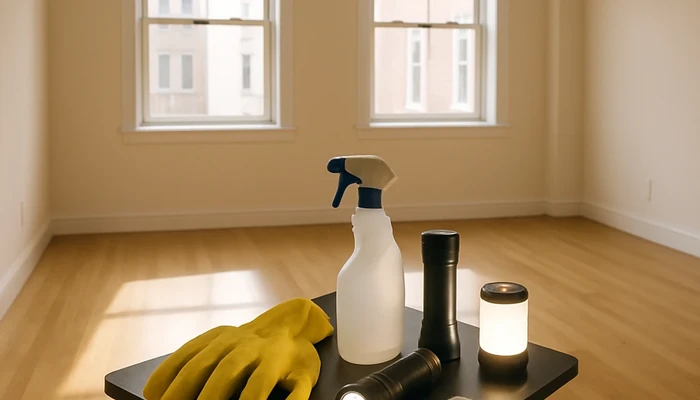
- Carry battery-powered flashlights or lanterns for proper visibility, especially for final inspections.
- Use odor absorbers or neutralizers for empty fridges or garbage areas.
These adaptations don’t replace full cleaning but help prevent an impression of neglect when utilities aren’t available.
Which Move-Out Cleaning Standards Must Be Deferred Until Utilities Return?
Many landlords or property managers require post-utility restoration “final cleans” before a new tenant enters. Standards that are typically deferred include:
- Full bathroom/kitchen sanitization
- Shampooing carpets or steam cleaning upholstery
- Deep cleaning appliances—including interiors
- Washing windows and screens
- Treating or remediating any visible mold
Coordinate with all relevant parties to schedule a final walkthrough and cleaning service once utilities are back online for best results.
Move-Out Cleaning Table: Utilities vs. What Can Be Done
| Utility | Cleaning Task Possible? | Examples |
|---|---|---|
| All On | Full cleaning | Wet mopping, steam cleaning, disinfection |
| Water Off | Limited (dry only) | Dusting, sweeping, trash removal |
| Power Off | Very limited (no vacuums, low lighting) | Manual sweeping, spot wiping |
| HVAC Off | Basic cleaning, but drying limited | Risk of lingering moisture/mold |
| Multiple Off | Minimal cleaning | Visual debris removal, basic dusting |
This table shows at a glance what kinds of cleaning are realistic as each utility is disrupted.
The Role of Documentation: Protecting Deposits and Avoiding Disputes
If you’re forced to move out before utilities are restored, thorough documentation is your best defense. Professionals:
- Take dated photos and videos of every room after cleaning.
- Describe in writing which tasks were completed and which could not be performed due to utility constraints.
- Leave a written note for landlords or next occupants outlining what is required for a full clean.
- Refer landlords to reputable resources on cleaning requirements, such as CDC and EPA publications.
This system shows reasonable effort and can reduce the risk of losing a security deposit over unavoidable cleaning issues.
Key Hygiene and Safety Considerations When Utilities Are Absent
Professionals prioritize the safety of the space and its users, even when move-out cleaning is limited:
- Avoid using chemical cleaners that require rinsing—residues left behind can cause irritation.
- Keep areas as dry as possible to prevent slip hazards or mold proliferation.
- If any food is left in appliances, remove it and prop doors open to avoid odors or biological growth.
- Mark off and communicate any areas that are left unsanitized or partially cleaned so occupants are aware.
When in doubt, seek out advice from professional sources. The CDC and EPA offer protocols for cleaning and remediation safety when resources are limited.
Adjusting Cleaning Plans for Special Facilities and Commercial Spaces
Move-out cleaning in offices, Airbnb units, or specialized facilities (restaurants, medical, etc.) faces additional challenges during utility shutoff. Express Clean’s process includes:
- Pre-move coordination with building managers and utility companies to minimize cleaning downtime.
- Bringing required safety gear and portable sanitation products for staff and compliance.
- Documenting cleaning standards for regulatory audits (especially in healthcare or food service spaces).
- Capturing feedback from property managers and tenants on how the shutdown affected the cleaning scope.
When you require a deeper clean for commercial turnarounds, schedules may need to be adapted or cleaning split into two phases: pre- and post-utility restoration.
When It’s Worth Rescheduling Professional Cleaning
Certain situations demand waiting for utilities to be restored:
- Deposit at risk: If security deposit recovery depends on thorough, full-scope cleaning.
- Specialized cleaning: Properties requiring disinfection, mold remediation, or appliance servicing.
- Weather hazards: If temperature or humidity pose a risk to property or cleaner safety.
- Legal or insurance compliance: Where incomplete cleaning might create liability.
Talk with all stakeholders if a split or rescheduled service better protects your interests. Express Clean offers flexible booking for Move out cleaning services when utilities are back online.
Communication Templates for Tenants and Managers
Clear communication avoids future disputes. Here’s a sample approach for documenting what you’ve done and what still needs attention:
- “Due to water and electricity shutoff as of [date], cleaning was limited to dry methods. Surfaces have been dusted and trash was removed, but bathrooms and floors could not be fully sanitized. Documentation and photos have been provided. We recommend a second cleaning once utilities are restored.”
CC your landlord or property manager and store correspondence for your records.
Practical Checklist: Move-Out Cleaning When Utilities Are Shut Off
- Confirm which utilities are off, and when.
- Prioritize dry dusting, sweeping, and waste removal.
- Use portable wipes and minimal water for spot cleaning.
- Document all tasks performed with photos and a room-by-room list.
- Clearly mark tasks deferred for post-utility restoration (bathrooms, mopping, appliances).
- Notify landlords/property managers immediately if move-out cleaning is incomplete due to shutoffs.
Following a structured approach saves time and complications as you prepare to hand over the property.
FAQ: Move-Out Cleaning When Utilities Are Shut Off
1. Can professional cleaners fully sanitize my property with no water or power?
No. Critical tasks—such as mopping, deep sanitizing kitchens or bathrooms, or using extraction machines—are impossible without utilities. Only limited dry cleaning and trash removal are feasible.
2. Will a lack of utilities jeopardize my deposit?
Possibly, if your lease requires “broom clean” or a higher cleaning standard at move-out. Protect yourself by documenting limits and informing your landlord.
3. What cleaning should I prioritize when utilities are shut off?
Focus on visible debris removal, dusting, sweeping, and clearing out appliances as much as possible with the supplies you have on hand.
4. Is it safe to use leftover cleaning chemicals if I can’t rinse them?
No. Avoid any cleaning agents that require rinsing. Residue can damage surfaces and create safety risks if not properly removed.
5. How should I communicate cleaning limitations to my landlord?
Clearly document by email, include dated photos, and describe which tasks were impossible due to utility shutoffs. This helps minimize disputes when deposits are at stake.
6. Can I still have carpets professionally cleaned with utilities off?
No—carpet cleaning machines require both water and power. Schedule this work for after utilities are restored.
7. Are there legal consequences for incomplete cleaning due to a shutoff?
Generally, if you’ve made reasonable effort and documented the cause, most landlords are understanding. Check your lease for any specific requirements.
8. What are the best sources for cleaning safety advice in these cases?
Refer to the CDC for residential advice and the EPA for commercial or mold remediation protocols.
9. Will Express Clean perform move-out cleaning without utilities?
Express Clean will provide the maximum cleaning possible with available resources and transparent documentation. For full cleaning, rescheduling until utilities are on is recommended.
10. What options do I have if I can’t schedule the cleaning before utilities go off?
Request written acknowledgment from your landlord about the limits. Arrange a post-utility cleaning appointment so your space meets all hygiene and handover expectations.
Conclusion: Protect Your Space and Reputation During Move-Out With Utilities Off
Move-out cleaning when utilities are shut off is rarely ideal, but with careful planning, documentation, and honest communication, you can still ensure a safe and respectful property turnover. Focus on achievable tasks, document all work and limitations, and coordinate with landlords or property managers for any deferred deep cleaning. Express Clean provides guidance and flexible scheduling for move-out and apartment cleaning jobs—ensuring your space is clean when it matters most.
About Express Clean
Express Clean is a trusted provider of residential and commercial cleaning solutions in Chicago, Illinois, and nearby areas. With expert teams trained for move-out, recurring house cleaning, deep cleaning, office, and specialized facility services, Express Clean delivers transparent communication, flexible scheduling, and impeccable results. Our focus on proper protocols, professional equipment, and long-term client relationships keeps households and businesses clean, healthy, and move-in ready.
chicago cleaning contractors, move out cleaning services Cleaning Chicago, move out cleaning service Cleaning Chicago, Winfield move out cleaning service, move out cleaning services Berwyn IL, move out cleaning Barrington IL, move in move out cleaning Service In Harvey, move out cleaning Bartlett IL, Wood Dale cleaning services move out, Lansing move out cleaning