
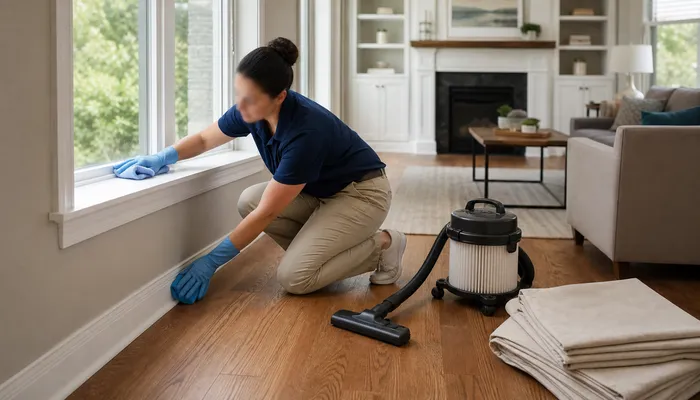
Post-renovation cleaning in Wheaton Illinois is a different job from a standard house cleaning visit. After a kitchen remodel, a finished basement, or a whole-floor renovation, a property is covered in drywall dust, joint compound, paint overspray, adhesive residue, and construction debris. Most of it is not visible from the doorway. It settles on cabinet fronts, inside window tracks, along baseboards, and on every horizontal surface in the house, and it keeps reappearing for weeks after the crew packs up.
Illinois is the frame for that work. It is a Midwestern state that borders Lake Michigan to the northeast, the Mississippi River to the west, and the Wabash and Ohio rivers to the south, with Chicago as its largest city and Springfield as its capital. It is also one of the most populated states in the country, with an estimated 12.69 million residents according to Census Reporter’s ACS 5-year 2023 profile. A state that large keeps a continuous flow of remodeling work moving through its suburbs, and every finished project leaves behind the same question: who removes the dust?
Why Renovation Dust Is a Cleaning Problem, Not a Construction Problem
Contractors are responsible for what they install, not for the dust that leaves the site with them. Most crews do a rough sweep at the end of a job: they haul materials away, bag debris, and remove the largest leftovers. What stays behind is the fine material — the part that behaves more like smoke than like dirt. Joint compound and drywall dust are light enough to float for hours, drift through open doorways, and travel through return air.
That is why a swept floor rarely looks clean two days later. Foot traffic lifts residue back into the air, ceiling fans and forced-air systems redistribute it, and a damp cloth used too early simply pushes a gray film across the surface. The EPA’s indoor air quality guidance makes the same practical point about particles and ventilation: unless dust is captured and removed instead of moved around, it stays in the living space.
Homeowners across the western suburbs run into this in buildings that behave differently. An older house with plaster walls and a basement workshop holds dust differently from a 1990s subdivision home with a sealed HVAC system, and a second-floor condo with shared corridors spreads it differently again. The material is the same; the plan to remove it is not.
What Post-Renovation Cleaning in Wheaton Illinois Removes
Post-renovation cleaning in Wheaton Illinois focuses on the material construction leaves behind rather than on tidying a home that is already clean. A complete pass usually covers:
- Drywall and joint compound dust on walls, ceilings, trim, and door frames — the fine powder that reappears on every surface after a wipe-down.
- Construction debris such as caulk strings, drywall cutouts, screws, tile spacers, and packaging left in corners and behind appliances.
- Paint overspray and splatter on floors, baseboards, window frames, and hardware.
- Grout haze and thin-set residue on new tile floors and inside shower surrounds.
- Adhesive and sticker residue on new windows, appliances, and fixtures.
- Dust inside cabinets, closets, drawers, and vanities — spaces that are often installed before the mess is created.
- Vent covers, air returns, and light fixtures that collect a visible layer of dust while trades are on site.
Sawdust from trim work, sanding dust from hardwood refinishing, and the light film left on glass after window replacement belong to the same category. None of it responds well to a normal damp-mop routine, and none of it should be handled before the last trade has left the property.
A Room-by-Room Final Cleaning Checklist
Post-construction work is easier to judge when you know what should be finished before the furniture comes back. A practical final pass covers:
- Kitchen. Inside and outside of cabinets, drawers, and appliance cavities; range hood; backsplash; sink and fixtures; floors after the last appliance is set in place.
- Bathrooms. Tub, shower, tile, glass, grout lines, mirrors, vanities, toilets, and the dust that collects on top of the vanity light.
- Bedrooms and living areas. Walls, baseboards, crown molding, window frames, sills, glass, light fixtures, outlets, and switch plates.
- Floors. Dry capture first, then damp mopping or a floor-appropriate finish, working from the farthest corner back to the exit.
- Stairs and hallways. Handrails, spindles, ledges, and treads that were used as a work path for weeks.
- Garage, basement, and utility areas. Remaining debris, sweep-out, and the dust line along the foundation wall.
Newly installed surfaces need the right product, not the strongest one. Quartz, natural stone, sealed hardwood, luxury vinyl, and matte-finish tile all react differently to abrasives and to acidic cleaners, so the checklist follows the materials in the house rather than a standard supply list.
How the Work Is Sequenced So Dust Does Not Come Back
The order of the work matters more than the effort. The general rule is dry before wet, high before low, and inside before outside.
- Dry capture first. HEPA vacuums and microfiber pick up dust instead of pushing it into the air; dry sweeping and feather dusters spread it.
- Top down. Ceilings, light fixtures, vent covers, and the tops of tall cabinets are cleaned before walls and floors.
- Interiors before surfaces. Cabinets, drawers, closets, and appliance interiors are cleaned before the final floor pass.
- One direction out. Each room is finished from the farthest point back to the doorway so nobody walks through a completed space.
- Ventilation check. Air returns and registers get attention, and HVAC filters are replaced after the dusty phase rather than during it.
The team works from a written room-by-room checklist — the Express Clean Checklist™ — so bathrooms are finished before hallways and nobody skips the window tracks. If you want to understand why fine dust keeps returning after a renovation, this guide on post-renovation dust control explains the pattern in detail.
Renovation Cleanup Across the Wheaton and DuPage County Group
The Wheaton and DuPage County area covers five municipalities with different building types and different renovation habits. Wheaton is the largest of the group by population estimate, and its projects range from a single bathroom update to a full-house remodel. In Glen Ellyn, most of that work happens in occupied homes, where furniture, pets, and a lived-in schedule have to be protected while a project finishes. Once the heavy dust phase ends, many households there set up recurring maid service in Glen Ellyn, IL to keep the new rooms from drifting back toward a work-site state.
Glendale Heights brings apartment and condominium buildings into the picture alongside single-family homes, and that changes the logistics: shared entryways, elevator access, limited water and power in vacant units, neighbors who notice noise and odors, and short-term rental units that need a fast reset between guests. Multifamily buildings rarely use the same checklist as a house, a point covered in this overview of multi-unit building cleaning in the West Suburbs. Inside the village, apartment and condo cleaning in Glendale Heights, IL follows the same dry-first sequence, with extra attention to the stairwells and entries that carried construction traffic.
Winfield is the smallest of the five and largely residential, with the DuPage River running through the village. Renovations there tend to be smaller in scope — a bathroom, a kitchen, a finished attic — but the cleaning standard does not change, and that housing stock also keeps steady demand for ongoing house cleaning in Winfield, IL once the construction dust is gone for good.
Bartlett rounds out the group and is the only one located in Cook County rather than DuPage County, with most of the village in Hanover Township. Renovation work there includes both homes and small commercial spaces. That commercial side usually runs on a tighter clock: office and retail cleaning in Bartlett, IL is planned after hours so the space can open the next morning. In Wheaton, most commercial requests involve commercial cleaning in Wheaton, IL for professional offices, clinics, and small buildings where a renovation and a public entrance have to stay functional at the same time.
When to Schedule the Final Clean Before You Move Back In
Timing is usually the hardest part of a renovation. Booking post-renovation cleaning in Wheaton Illinois for the day after the punch list closes, and before the moving truck arrives, is the practical order. When boxes, furniture, and bedding come in first, they absorb the same fine dust that has been floating through the house for weeks.
Two situations are worth planning around:
- The punch list drags. Paint touch-ups and trim work restart the dust clock. A short touch-up visit after the last trade leaves costs less than a second full clean.
- The deadline does not move. When a lease ends or a closing date is fixed, same-day and short-notice cleaning can be arranged subject to availability, so a delayed contractor does not turn into a financial problem.
If the property is being sold or handed to a new tenant instead of lived in, the process is the same, with priorities shifted toward the finishes a buyer or an inspector will look at: appliance cavities, bathroom grout, window glass, and floor edges.
Practical Questions About Post-Construction Cleaning
How Soon After the Last Contractor Leaves Can Cleaning Start?
The clean can begin the same day or the next morning once trades are off site and the work area is cleared. If a crew is still active in one room, that area waits — cleaning a space that is still being worked in just creates a second round of dust.
What Determines the Cost of a Post-Renovation Cleaning?
Square footage is only one factor. Scope matters more: whether cabinets and closets are cleaned inside, how much debris remains, ceiling height, number of bathrooms, type of flooring, and whether windows, vents, and HVAC returns are included. A quote based on the actual condition of the property is more reliable than a per-room estimate given over the phone.
Is Post-Construction Cleaning Different From a Regular Cleaning Visit?
Yes. A regular visit maintains a home that is already clean. Post-construction work removes dust and residue that has settled into the building itself, and it usually takes longer per room. The difference is explained further in this overview of what a standard cleaning service in Illinois includes.
Does the Service Include Vents, Light Fixtures, and Inside Cabinets?
Those areas are normally part of the scope, but they should be confirmed at booking. Vent covers and air returns collect a visible layer of dust during construction, and cabinets are often installed before walls are sanded, so both are easy to overlook when the checklist is not explicit.
Can a Small Office, Salon, or Retail Space Be Cleaned the Same Way?
Yes, with adjustments for access and hours. Commercial renovations add concerns that homes do not have: alarm systems, after-hours entry, parking, customer-facing areas that must be ready for opening, and shared spaces in multi-tenant buildings. Scheduling is usually set outside business hours.
Planning the Final Clean Before the Punch List Closes
Most renovation headaches fade once the dust is gone. Owners in Wheaton, Glen Ellyn, Winfield, Glendale Heights, and Bartlett usually know the exact moment it happens: daylight comes through the new windows the way it was supposed to, the floors reflect properly, and the rooms finally match the plans. That result depends less on effort than on sequence — dry capture before damp mopping, interiors before surfaces, and a clear scope agreed before anyone starts.
Express Clean has worked on residential and commercial properties across Illinois for more than 10 years, with licensed, bonded, and insured teams, transparent estimates, and flexible scheduling that includes off-hours visits when a project runs late. If you are ready to close out a renovation, call (630) 425-0210 or request an estimate through the contact page with the property address, the scope of the work, and the date the last trade is scheduled to finish.