Electrostatic Spraying: When It’s Useful and When It’s Just a Buzzword
In the rapidly evolving world of cleaning, new technologies and trends often surface, promising revolutionary results. Electrostatic spraying: when it’s useful and when it’s just a buzzword is a hot topic—and for anyone considering professional cleaning, it’s critical to separate proven value from marketing hype. This guide helps you understand what electrostatic spraying truly offers, when it matters, and when traditional methods suffice—all so you can make confident decisions for your home or business. Drawing from Express Clean’s years of experience in residential, commercial, and specialty cleaning in Chicago, we’ll clarify the science, outline use cases, and give you practical questions to ask before hiring a cleaning company relying on this technology.
Defining Electrostatic Spraying: What It Is and How It Works
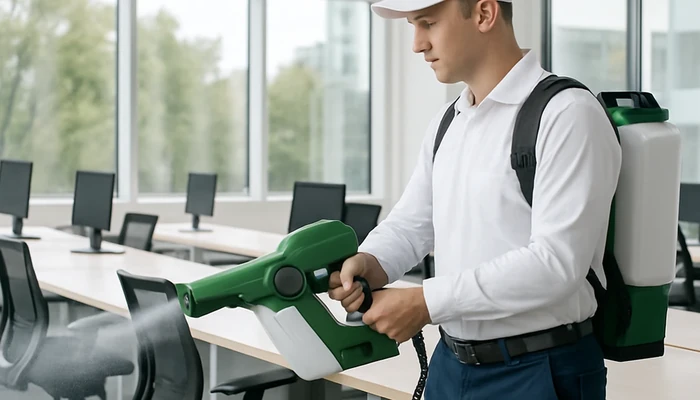
Electrostatic spraying is a cleaning and disinfecting method where liquid disinfectant is electrically charged as it’s sprayed, causing the droplets to wrap around surfaces more completely than traditional misting or wiping. The charged particles are attracted to surfaces, including those that may be hard to reach by hand, and are designed to provide a uniform coating for improved disinfection efficiency.
- Core principle: Uses electrostatic charge to enhance coverage.
- Typical equipment: Handheld or backpack sprayers with charging mechanisms.
- Main uses: Applying EPA-registered disinfectants to surfaces in homes, offices, schools, and healthcare facilities.
While it sounds cutting-edge, the technology itself has been used in other industries for decades. The recent surge in cleaning applications is largely due to elevated hygiene expectations post-pandemic.
Behind the Technology: What Sets Electrostatic Spraying Apart?
Unlike standard pump sprays or foggers, electrostatic sprayers impart an electric charge to disinfectant droplets. This causes the mist to wrap around and cling to surfaces, reducing the risk of missed spots. In theory, this assures that even complex, odd-shaped items (like office chairs or exercise equipment) get a consistent coating.
- Wraparound effect: Droplets attracted to all sides—even hidden ones.
- Reduced waste: Less overspray means more efficient product use.
- Speed: Larger areas can be treated faster than with manual wipes.
However, the true benefit depends on surface type, room layout, and operator skill.
True Advantages: When Electrostatic Spraying Is Genuinely Useful
- Complex or crowded environments: Schools, gyms, or shared workspaces with many high-touch objects.
- Healthcare and sensitive settings: Clinical facilities, dental offices, or spaces needing validated disinfection protocols.
- Fast turnover needs: Airbnb units, rental properties, or event venues between bookings.
- Large square footage: Warehouses, open-plan offices, conference facilities.
In these cases, the technology can:
- Reach nooks and crannies missed by manual cleaning.
- Save time in routine disinfecting after known exposure incidents.
- Enhance peace of mind for occupants or guests concerned about hygiene.
Facilities where compliance with stringent sanitization standards is required (such as medical offices) may benefit most.
Overstated Claims: When Is Electrostatic Spraying Just a Buzzword?
Despite its potential, there are common scenarios where electrostatic spraying adds little value over conventional cleaning techniques. Beware of exaggerated claims suggesting it replaces routine cleaning or is necessary everywhere.
- Already clean surfaces: If a surface is not soiled, traditional disinfecting—done properly—is often just as effective.
- Homes with low risk: Standard house cleaning, especially where no illness is known, may not require specialized equipment.
- Smaller, cluttered areas: Hand-wiping may be more thorough in tight spaces.
- Marketing over substance: Some companies use the term to justify higher prices without updated protocols or product training.
In short, electrostatic spraying is not a substitute for manual cleaning of dirt and grime; surfaces must be physically cleaned before being sprayed for the disinfectant to work properly.
Table: Electrostatic Spraying vs. Traditional Misting & Manual Disinfection
| Criteria | Electrostatic Spraying | Traditional Misting | Manual Disinfection |
|---|---|---|---|
| Coverage | Wraparound, good for complex shapes | Uneven, can miss reverse sides | Highly precise, but only on touched surfaces |
| Speed | High for large areas | Moderate | Slowest, labor-intensive |
| Product Usage | Efficient, less overspray | Often wasteful | Efficient but time-consuming |
| Requires Surface Prep | Yes – pre-clean dirt and debris | Yes | Yes |
| Best Application | Healthcare, gyms, offices | Basic common spaces | Homes, tight spaces, detailed items |
Checklist: What to Assess Before Choosing Electrostatic Spraying
- Are the surfaces free of visible soil?
- Is the disinfectant used EPA-approved and suited for electrostatic use?
- Will the space be vacant during spraying and drying?
- Are cleaning teams trained on the correct dwell times and PPE?
- Is follow-up manual cleaning provided where needed?
- Does the provider use it only where it genuinely improves outcomes?
For medical-grade or compliance environments, consult relevant standards. See further reading at APIC’s Microlearning Hub for infection prevention in professional settings.
Key Applications in Residential Settings
Can electrostatic spraying benefit regular homes or apartments? Sometimes. It may be helpful after contagious illness, move-outs, or when tenants change, but for everyday life, high-touch area disinfecting and thorough hand cleaning (especially in kitchens and bathrooms) are more critical. Many protocols, such as those recommended in the Airbnb Cleaning QuickStart Guide, prioritize targeted disinfection over blanket spraying.
- For move-outs, consider specialized move out cleaning.
- For Airbnb hosts, focus on guest-touch surfaces. Review expert cleaning tips for superhosts.
Workplace & Commercial Use: Where It Adds True Value
Offices, facilities, and commercial buildings in Chicago have unique demands. Electrostatic spraying can play a role in:
- Routine disinfection of conference rooms, break areas, fitness spaces.
- Reducing cross-contamination in shared workstations.
- Post-event rapid resets (event cleaning).
Its greatest impact is in high-occupancy, shared environments where fast, consistent, large-area disinfection is needed. Consistent protocols matter—see how cleanliness influences the work environment for productivity and safety.
Limitations and Caveats: What Electrostatic Spraying Won’t Do
- It does not replace manual cleaning: Dirt must be removed before disinfectant can work.
- It doesn’t solve underlying pests, stains, or repair needs.
- Operator error is possible: Incorrect usage may leave areas untreated or waste product.
- Some surfaces are sensitive: Electronics, delicate fabrics, and food-contact areas require extra caution.
Proper staff training and understanding the limitations of the technology are essential. Safety standards (including in medical facilities) should always be verified.
Decision Framework: Is Electrostatic Spraying Right for My Space?
- Start with a risk assessment (recent illness, frequent use, regulatory needs).
- Evaluate the surfaces and size of the area.
- Ask for details on the disinfectant and equipment used.
- Seek transparency about protocols and safety.
- If in doubt, request a provider who will combine manual and electrostatic where appropriate.
See the latest cleaning company innovations for more frameworks and best practices.
Red Flags: Signs a Company Is Using Electrostatic Spraying Only as Marketing
- Vague answers about what product is used or what procedures are followed.
- No mention of pre-cleaning or manual touchups.
- Claims it “sanitizes everything instantly” or “eliminates the need for labor.”
- Only referencing the buzzword but not showing real training, certifications, or clean equipment.
Always inquire for documentation, safety data, and realistic timelines. Responsible companies will welcome your questions.
Comparing Claims: Questions to Ask Before Booking
- What disinfectant is being used, and is it approved for electrostatic application?
- What areas are being treated—and which aren’t?
- Is follow-up manual cleaning included where needed?
- How is the space prepared before spraying?
- How is safety for occupants and pets ensured?
- Are there specific limitations or excluded spaces?
Clear answers empower you to choose a service that’s more than marketing jargon.
Smart Integration: How the Best Cleaning Providers Use Electrostatic Spraying
- Combining manual cleaning of soiled surfaces with targeted spraying for hard-to-reach objects.
- Training staff in safe use, including PPE and correct dwell times.
- Applying in accordance with standards for office cleaning and common area cleaning.
- Documenting procedures and advising on return times for occupants.
This approach ensures safety and maximizes real health benefits—never just a visual performance.
Maintaining Healthy Environments Beyond Spraying
Electrostatic spraying, while valuable in the right setting, is only one component. Ongoing cleaning protocols include:
- Regular scheduled cleaning (manual wiping, vacuuming, dusting).
- Detailed attention in kitchens, bathrooms, and shared spaces.
- Frequent airing out and surface touchup in high-traffic areas.
For long-term safety, review Express Clean insights on common commercial cleaning mistakes and why sanitizing your work area is essential.
FAQ: Electrostatic Spraying in Professional Cleaning
- Does electrostatic spraying kill viruses and bacteria?
- It offers effective application of EPA-approved disinfectants that are proven to kill viruses and bacteria—if the disinfectant is used according to label instructions and on pre-cleaned surfaces.
- How does electrostatic spraying differ from fogging?
- Electrostatic spraying charges the disinfectant particles for better surface adhesion, while fogging distributes chemicals passively without specific targeting.
- Is this method safe for electronics or food-prep areas?
- Caution is required—equipment should avoid spraying directly on sensitive electronics or food-contact surfaces, or use specified products approved for these zones.
- How long do treated surfaces take to dry?
- Drying time ranges from a few minutes to 30 minutes, depending on ventilation and product; always allow proper dwell time before reentry.
- Do all cleaning companies in Chicago offer electrostatic spraying?
- No—only some companies make it part of their professional cleaning portfolio, and real value comes from training and protocols, not just the tool.
- When should I request electrostatic spraying for my business or property?
- Consider it for high-occupancy or high-risk spaces, post-exposure cleans, or when local guidelines recommend enhanced disinfection.
- Is it necessary for routine residential cleaning?
- Usually not—except after illness, tenant turnover, or for immunocompromised family members.
- Will prices for cleaning be higher if electrostatic spraying is used?
- Some companies may charge more due to specialized equipment, PPE, and training. Always ask for transparent pricing.
- Can I rent or buy this equipment for DIY use?
- While possible, proper usage requires product knowledge and safety protocols—DIY may not deliver the same results as professionals like Express Clean.
- How do I know if a cleaning team is using the equipment correctly?
- Look for clear staff protocols, PPE, knowledge of dwell times, and willingness to explain their process. Responsible providers are always forthcoming with information.
Wrap-Up: Making Informed Cleaning Technology Choices
Electrostatic spraying is a powerful tool when used correctly in the right environment. As with any cleaning innovation, value depends on genuine need, operator skill, and transparent communication. If you’re seeking professional-level disinfection for a Chicago home, office, or facility, be sure to ask about all cleaning protocols—not just the newest buzzword. Express Clean encourages you to choose providers who prioritize science-backed results over hype, ensuring a safer and healthier indoor environment.
About Express Clean
Express Clean is dedicated to helping households and businesses in Chicago, Illinois and nearby areas stay safe and hygienic. With specialized expertise in recurring house cleaning, deep cleaning, move out cleaning, office cleaning, and facility cleaning, our professionally trained teams use the right products and protocols for every challenge. We focus on quality, transparency, and building long-term relationships—delivering peace of mind with every visit.
cleaning company chicago il, commercial cleaning companies in Cleaning Chicago, commercial cleaning service Cleaning Chicago, commercial cleaning service Orland Park, commercial cleaning company Hammond IL, commercial cleaning contractors in the city of Des Plaines IL, commercial cleaning services Deer Park, commercial cleaning services in Fort Sheridan IL, Service Lake Bluff commercial cleaning, commercial cleaning Glen Ellyn IL