Managing Slip-and-Fall Risk and Floor Care During Wet Seasons: The Role of Commercial Cleaning
Every year, wet seasons transform entryways, lobbies, and common areas into high-risk zones for slip-and-fall incidents. Property managers, business owners, and facility teams face increased challenges maintaining safe, clean floors as rainfall and snowmelt track moisture and grit indoors. Understanding slip-and-fall risk and floor care during wet seasons: what commercial cleaning can do is essential to protecting people, reducing liability, and ensuring business continuity. This definitive guide from Express Clean gives you a complete strategy: the causes of slip-hazards, how commercial cleaning companies address them, best practices, checklists, and how to select a partner equipped for these seasonal demands.
Understanding the Hidden Hazards: Why Wet Seasons Raise Slip-and-Fall Risk
When rain and snow arrive in Chicago, water and grit naturally get tracked indoors. Even with frequent mopping, the microfilms of moisture, dirt, or melted ice not only make floors slippery, but grind abrasives into surfaces—damaging finishes and reducing traction. Recognizing these risk factors helps set the stage for targeted prevention:
- Wet entries, tiles, and vinyl exposed to outdoor weather
- Transitional spaces between carpet and hard floor
- Worn-out floor finishes losing their anti-slip properties
- Overlooked stairwells, ramps, and high-traffic choke points
- Improper or infrequent cleaning routines during peak wet periods
Minor oversights can quickly escalate, resulting in costly injuries or lawsuits. Proactive care reduces both safety and financial risk.
The Science Behind Slippery Floors: Moisture, Contaminants, and Surface Wear
Not all slips are caused by obvious puddles. The interaction of floor materials with moisture, debris, and cleaning chemicals fundamentally alters surface grip. For instance:
- Diluted cleaning solutions or incomplete drying leave a barely-visible residue that increases slip potential.
- Grit, sand, and ice-melt particles abrade waxes and sealants, diminishing slip resistance.
- Improper product selection can reduce friction instead of improving safety.
Maintaining optimal floor traction requires a coordinated cleaning strategy, especially in moisture-prone areas. ASTM safety standards provide detailed guidelines on slip resistance that professional cleaning teams use to adapt care protocols seasonally.
Mapping High-Risk Zones: Where Wet Weather Causes the Most Problems
Commercial buildings have unique risk zones in rainy and snowy months. Identifying and prioritizing these areas enables more effective cleaning and risk controls:
- Main entrances: First point of contact for tracked moisture, salt, or mud.
- Elevator lobbies and corridors: Grime buildup spreads quickly from entry points.
- Stairways and ramps: Sloped surfaces intensify risk if not kept dry and clean.
- Restrooms and break rooms: Increased hand washing and cleanup often lead to spilled water.
- Transition strips and thresholds: Where carpet meets hard surfaces is a frequent trip/slip zone.
Express Clean recommends conducting a building walk-through at the start of each wet season to identify problem spots that need special cleaning frequency or upgraded mats.
Daily Floor Care Protocols for Wet-Weather Commercial Safety
Professional cleaning teams follow strict protocols during wet seasons to minimize hazards and preserve floor lifespan. These tailored actions ensure optimal safety for staff and visitors alike:
- Entry Matting Strategy: Place high-performance absorbent mats outside and inside major entrances, and clean or replace them daily to maximize water and grit capture.
- Routine Damp Mopping: Use properly diluted neutral cleaners; avoid over-wetting areas to prevent water “tracking.”
- High-Touch Spot Checks: Monitor high-traffic areas every few hours for new puddles or debris build-up, addressing hazards immediately.
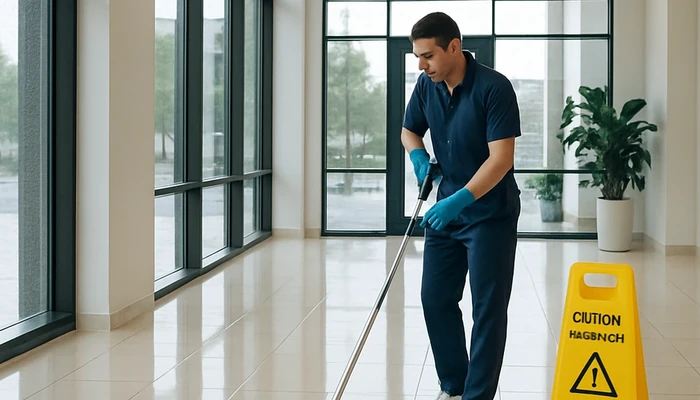
- Drying and Signage: Ensure floors are dried quickly after mopping and highlight wet zones with clear signage.
- Frequent Mat Cleaning: Clean, shake out, or switch mats throughout the day for maximum effect.
| Area | Frequency | Tasks | Responsible |
|---|---|---|---|
| Main Entrances | 2-4x Daily | Mat inspection, mop, spot clean | Cleaning staff |
| Corridors | 1-2x Daily | Spot mop, dry signage, debris removal | Cleaning staff |
| Restrooms/Break Rooms | 2x Daily | Mop, dry floors, restock supplies | Cleaning staff |
| Stairwells/Ramps | 1-2x Daily | Mop, inspect traction, signage | Cleaning staff/maintenance |
Entry Mat Systems: Your First Line of Defense
Absorbent, high-friction entry mats prevent up to 85% of tracked-in dirt and moisture, according to industry commercial best practices. Key matting principles include:
- Length: Use a minimum 10–15 feet of matting inside and outside entries.
- Material: Choose mats with both scraping (for grit) and absorbent (for moisture) layers.
- Maintenance: Clean, shake out, or replace mats daily during inclement weather for effectiveness.
Express Clean regularly inspects and maintains commercial matting systems to maximize safety and extend the life of interior finishes.
Product Selection: Cleaning Agents and Sealants for Safer Surfaces
Choosing cleaning agents suited to your floor type—and the season—is essential. Professional cleaning teams carefully select:
- Neutral pH cleaners that leave no residue or sticky film (reduces slip risk)
- Seasonal sealants formulated for winter sand/salt or rainy weather
- Non-slip floor finishes designed to meet ASTM slip resistance standards
Incorrect product use can unintentionally make floors more dangerous, so trained cleaning staff always follow manufacturer guidelines.
Scheduling and Frequency: How Often Should Floors Be Cleaned in Wet Seasons?
During wet months, cleaning frequency often doubles for high-risk areas. The right cleaning schedule is defined by:
- Building type: Office, retail, multi-unit, or specialized facility
- Foot traffic: Number of staff, visitors, peak activity times
- Past incident reports: Known slip or trip zones from previous seasons
Express Clean customizes cleaning plans after a thorough walk-through of your facility and will adjust frequencies throughout the season as foot traffic changes.
Checklists and Inspection Protocols: Keeping Teams Accountable
Using detailed floor care checklists and shift logs ensures nothing gets missed. Effective checklists should include:
- Clear documentation of each area inspected or cleaned
- Time-stamped completion of spot mopping or mat checks
- Records of product usage and maintenance performed
- Reporting of any hazards, quick response steps taken, and follow-ups
Accountability in cleaning not only improves floors but can provide vital documentation if a slip-and-fall claim arises.
Staff Training: Teaching Cleaners Seasonal Safety Protocols
Well-trained staff are key to successful floor care during wet months. Training covers:
- Identifying high-risk areas quickly
- Mastering mop technique to avoid over-applying water
- Choosing and correctly diluting the right cleaning products
- Responding to hazards immediately and placing signage
- Understanding product labels and manufacturer instructions
Express Clean invests in ongoing team education to ensure high standards and quick hazard mitigation.
Complying with Standards: OSHA, ASTM, and Commercial Cleaning Requirements
Adherence to recognized cleaning and safety standards like those from OSHA and ASTM means your cleaning team uses documented safe practices. Compliance includes:
- Matching slip resistance levels to floor type and use case
- Using only approved detergents and finishes
- Documenting and storing records of cleaning protocols
Having a commercial cleaning provider like Express Clean with a record of compliance helps you reduce liability and maintain health code standards. You can explore standards in detail via ASTM guidelines.
Innovative Technologies: How Modern Cleaning Tools Reduce Risk
The latest equipment and cleaning technologies further reduce wet-weather slip risks. Examples include:
- Microfiber mops and cloths for improved absorption and debris pick-up
- Automatic floor scrubbers that remove more water and residues than traditional mops
- No-touch mat washers for efficient, hygienic mat maintenance
Express Clean stays updated with new technology, ensuring your floors receive the most effective treatment available. Learn more from our post on how cleaning companies are innovating.
Pre-Season and Ongoing Facility Assessments: Don’t Wait for Hazards
Prevention starts before the rain or snow falls. Proactive steps include:
- Annual review of floor conditions and slip history
- Replacing worn mats, updating signage, scheduling deep cleans
- Evaluating whether floor finishes or sealants need recoating
In-season, regular inspections catch new hazards quickly. Learn more about commercial cleaning mistakes and how to avoid them for detailed insight into prevention.
Commercial vs. Residential: Key Differences in Wet-Season Floor Care
- Higher foot traffic in commercial settings demands more frequent cleaning and mat changes.
- Broader range of flooring materials (tile, vinyl, concrete, specialty coatings) calls for expert product selection.
- Legal compliance, insurance, and formal logs are typically required in business environments.
Choose a cleaning provider familiar with both home and commercial protocols for the best results, especially when managing facilities with mixed-use spaces. If you manage common areas or shared facilities, see our advice on cleaning in the common areas of a building.
Special Considerations: Medical, Food Service, and High-Touch Facility Floors
Certain spaces—like clinics, restaurants, or schools—demand even greater vigilance. Key factors:
- Medical environments require specialized disinfectants and barrier mats to help prevent cross-contamination (medical facility standards).
- Food service floors need to control both visible spills and invisible grease films (see food hygiene standards).
- Classrooms and high-touch spaces require more frequent cleaning and attention to material compatibility (classroom cleaning guide).
Adapt cleaning plans based on the occupancy and type of facility for maximum impact.
Managing Liability: Documenting Cleaning and Reporting Incidents
Besides improving safety, clear documentation supports legal defense should an accident occur. Facility managers should:
- Maintain digital or hard-copy logs of each cleaning round
- Note any incident, response action, and communication with affected parties
- Retain records of equipment and product documentation for compliance audits
This approach not only demonstrates a culture of care but is key during insurance or regulatory reviews.
Case Study: Mitigating Slip Risk in a Busy Chicago Office Building
One recent Chicago client saw slip-and-fall reports drop by 60% after switching to Express Clean’s wet-season protocols. Key interventions included:
- Upgrading entrance mats and scheduling twice-daily mat cleaning
- Switching to a neutral pH, residue-free cleaner
- Adding midday spot checks to entry corridors and stairwells
- Staff retraining sessions focused on hazard response and season-specific best practices
Within one season, the uptick in safety gave peace of mind to staff and visitors while extending the life of flooring throughout the building.
How to Choose a Commercial Cleaning Company Equipped for Wet-Season Floor Care
Not all cleaning providers are equally prepared for the demands of wet seasons. When evaluating partners, look for:
- Proven protocol for mat systems, product selection, and seasonal scheduling
- Experience in handling similar building types and floor materials
- Staff training plans and documented compliance with ASTM and OSHA standards
- Good communication, transparent pricing, and flexibility with schedules
Express Clean’s cleaning staff follow detailed checklists, ongoing training, and maintain open communication—helping businesses in Chicago stay safe and presentable throughout all seasons.
FAQ: Slip-and-Fall Risk and Wet-Season Floor Care
Moisture tracked indoors, worn-out finishes, and improper cleaning products often combine to reduce floor traction. Poor matting and infrequent cleaning increase the risk.
How often should mats and hard floors be cleaned in a commercial building during rain or snow?
High-traffic areas may need cleaning or inspection every 2–4 hours, especially in entryways. Mats should be cleaned or replaced at least daily in wet seasons.
Do all cleaning solutions improve slip resistance?
No. Some cleaning agents leave residues that decrease friction. Always select residue-free, neutral pH products and consult your cleaning provider on compatibility for your floor type.
Is signage required after every floor cleaning?
Signage is necessary anytime floors are wet or being cleaned, as per safety standards and OSHA recommendations. It’s part of Express Clean’s safety protocol.
How can facility managers monitor cleaning effectiveness?
Use detailed inspection logs, request time-stamped cleaning records, and visually inspect high-risk areas throughout the day.
What role does compliance play in reducing liability?
Following ASTM and OSHA cleaning standards and keeping thorough documentation helps demonstrate due diligence, reducing legal and insurance risk if an incident occurs.
Can slip-prevention methods also help extend floor life?
Yes. Proper matting, regular cleaning, and the use of gentle, residue-free products not only reduce risk, they also preserve surface finishes and reduce costly repairs.
Should cleaning schedules differ for medical or food service facilities?
Yes. Specialized sites require more frequent, targeted cleaning with compliant products to address both hygiene and safety. See our linked guides for details relevant to your business type.
How do I know if a cleaning provider understands the demands of wet seasons?
Ask for references, protocols, safety records, and examples of seasonal adjustments in other Chicago facilities. Choose teams with documented training and a strong safety record.
What’s the fastest way to reduce immediate slip hazards?
Inspect entry mats and main traffic routes, clean or replace mats, ensure floors are thoroughly dried after mopping, and clearly mark any wet areas with signage.
Wrap-Up: Ensuring Safer Floors and Reduced Risk During Chicago’s Wet Seasons
Managing slip-and-fall risk and floor care during wet seasons is a year-round commitment—but with the right strategy, you can vastly reduce accidents, extend the life of your floors, and ensure a welcoming environment for everyone entering your facility. Professional cleaning companies like Express Clean offer the training, checklists, and tools needed to keep commercial spaces clean, safe, and ready for anything the Chicago weather brings.
If you are ready for a safer workspace and want to discuss flexible entry mat strategies, product choices, or custom floor care plans, explore these trusted service solutions:
About Express Clean
Express Clean is a leading provider of recurring house cleaning, deep cleaning, move out cleaning, office cleaning, and specialized facility cleaning services for households and businesses throughout Chicago, Illinois and nearby areas. Our highly trained team uses professional products, established safety standards, and detailed checklists to help you maintain a clean, healthy environment and steady operations during every season.
cleaning services chicago il, commercial cleaning services in Cleaning Chicago, commercial cleaning companies in Cleaning Chicago, commercial cleaning Naperville, commercial cleaning services in Frankfort IL, commercial cleaning services Aurora, commercial cleaning Warrenville, commercial cleaning companies in Lincolnwood IL, commercial cleaning services Wheaton IL, Spring Grove commercial cleaning services