
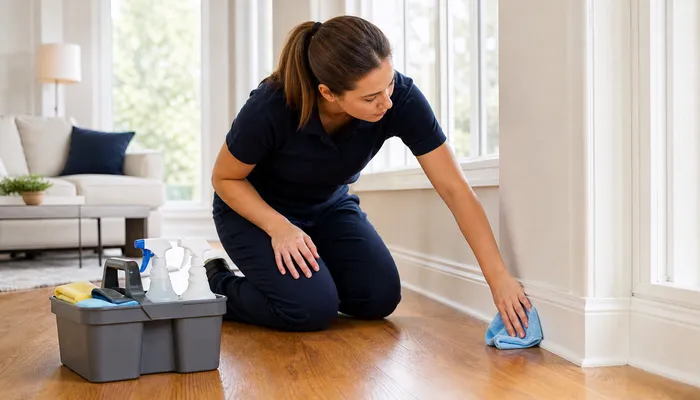
Choosing between a deep cleaning vs. regular cleaning visit comes down to what your space actually needs right now. A regular cleaning keeps a home, apartment, or office at a steady baseline. A deep cleaning resets the surfaces that a weekly pass never reaches. For residents and business owners across Chicago, that distinction matters more than it sounds, because the city’s neighborhoods mix century-old brick buildings with newer construction, and each kind of space collects dust, grease, and grime in different places.
What a Regular Cleaning Visit Usually Includes
Regular cleaning is maintenance. It is the visit you schedule weekly, biweekly, or monthly to keep a space looking cared for and to stop build-up from settling in. The scope is predictable, which is the whole point: you know what gets done, and you can plan around it.
A standard visit from a professional crew typically covers:
- Dusting reachable surfaces such as tables, shelves, ledges, and window sills
- Vacuuming carpets and rugs, then mopping hard floors
- Wiping kitchen counters, cabinet fronts, sinks, and the exterior of large appliances
- Cleaning bathrooms: toilets, sinks, tubs, showers, and mirrors
- Removing trash and light tidying of the main living areas
Regular cleaning assumes the space was reasonably maintained before the crew arrived. It keeps the baseline steady. It does not chase grease that has baked onto a range hood or dust that has settled behind a radiator over several years.
What a Deep Clean Adds Beyond Routine Maintenance
Deep cleaning targets accumulated build-up, not day-to-day mess. It works on edges, seams, and surfaces that get skipped in a weekly routine, and it usually takes longer because the list is longer and the work is more detailed.
A deep clean generally reaches:
- Baseboards, door frames, vents, and window tracks
- Inside the oven, refrigerator, and selected cabinets
- Grout lines and tile edges in kitchens and bathrooms
- Areas behind and under furniture where access allows
- Light fixtures, switch plates, and ceiling fans
- Detailed wipe-down of appliance handles and exteriors
- Interior windows and sills
The practical difference is simple. A regular cleaning keeps a clean space clean. A deep clean makes a space clean in the first place.
Dust that builds up in vents, on trim, and behind furniture is the same material that circulates through indoor air, which is why a reset matters in households with pets, allergies, or heavy traffic. The EPA’s indoor air quality guidance explains how dust, moisture, and ventilation interact inside a home or workplace.
When Deep Cleaning vs. Regular Cleaning Makes Sense
Most people do not need to pick one forever. The honest answer is that a deep cleaning vs. regular cleaning decision depends on where the space is now and what is coming next. Many clients start with a deep clean and then move onto a recurring schedule that protects the result.
Book a Deep Clean When
- You are moving in, moving out, or turning over a rental
- The space has not been professionally cleaned in a long time
- A renovation, repair, or appliance replacement just finished
- Pets, children, or heavy daily use have changed the condition of the space
- You want a reset before a season with more guests or activity
- You are about to start a recurring plan and want a proper starting point
Stay on a Regular Schedule When
- The baseline is already acceptable and you want to keep it that way
- You want predictable upkeep instead of one-time resets
- You want to spend less time on the small tasks that add up on their own
If you are weighing the two, the cleanest rule of thumb is this: reset first, then maintain. That order keeps the deep clean from being wasted on a space that will slide back into its old condition within a month.
How Chicago’s Older Neighborhoods Shape the Answer
Chicago’s housing stock is the single biggest factor that changes how deep a cleaning needs to be. The service area spans several different eras of construction, and each one produces its own kind of cleaning problem.
Pilsen, part of the Lower West Side community area, sits inside a historic district with buildings that survived the Great Chicago Fire of 1871. That means plaster walls, wood trim, and decades of layered paint, the kind of surfaces that hold dust in ways newer drywall does not. For households working toward move-out cleaning in Pilsen, IL, the job is usually detail work: edges, trim, and the small gaps that only get touched during a reset.
On the Northwest Side, Albany Park sits beside the North Branch of the Chicago River and shares the same bungalow-and-two-flat mix as several nearby community areas. Family homes there tend to have more surface area to maintain: multiple bedrooms, basements, radiators, and window casings. For those homes, house cleaning visits in Albany Park, IL work best when the first appointment is a deep clean and the follow-ups run on a schedule.
Portage Park and Jefferson Park were built out during the city’s bungalow-belt expansion, and Avondale, which sits along the Kennedy Expressway corridor, mixes older housing with newer infill. The older brick units, the tighter modern buildings, and the busy commercial corridors all behave differently under a mop. There is no single answer to how often a space needs a deep clean; the building itself sets the floor.
Deep Cleaning vs. Regular Cleaning for Homes and Businesses
The same logic applies on both the residential and commercial side, but the details change. In a home, the deep clean centers on kitchens, bathrooms, baseboards, closets, and anything that has not been moved in a while. In an office or restaurant, it centers on high-touch surfaces, shared kitchens, restrooms, and floors, especially the areas an inspection or walk-through would notice.
For apartments and short-term rentals, the choice is often dictated by turnover. A studio or one-bedroom in Avondale may only need deep cleaning for apartments in Avondale, IL a couple of times a year, with lighter recurring visits in between. Short-term rentals run on a different rhythm: an Airbnb turnover cleaning in Ukrainian Village, IL has to reset a full unit between two sets of guests, which pushes more of the deep-clean checklist into the standard turnover.
On the commercial side, small offices, clinics, and restaurants usually schedule recurring visits and then add a deep clean around seasonal slowdowns, health inspections, or remodeling. That pattern shows up often with small office cleaning in Jefferson Park, IL, where weekly or biweekly routines carry most of the load and deeper work on vents, carpets, and shared spaces happens periodically.
For single-family homes in the far Northwest Side bungalow neighborhoods, the pattern is usually reversed: the deep clean comes first, and recurring cleaning in Portage Park, IL protects that result from week to week.
If you want the reasoning behind the recurring side, our post on how recurring cleaning schedules are built walks through how frequency and time slots get set. For the difference between an end-of-lease job and a standard visit, Is Move Out Cleaning Different From Regular Cleaning? covers the specifics.
What Separates a Well-Scoped Deep Clean
Anyone can run a mop across a floor and call it deep. What separates a professional result is scope, consistency, and the checklist behind it. Deep cleaning in older buildings especially rewards a methodical approach: work top to bottom, dry before wet, and reach trim, vents, and edges before the visible surfaces. Our teams work from the Express Clean Checklist™, which keeps the same items accounted for whether the job is a Jefferson Park two-flat or a Pilsen restaurant after a slow season.
Products matter too. Eco-friendly products and professional equipment are not the same thing as a stronger scent, and a cleaning that is documented works better than a cleaning that is improvised. That is also why we fix the scope before booking: it prevents the “missed areas” problem that shows up when nobody agreed on what was included.
If you want more on why the reset matters in the first place, our post on why it is important to hire a deep cleaning service goes deeper on the reasoning.
How to Decide for Your Own Space
If you are still unsure, start with three questions: How long has it been since the last professional clean? How is the space used day to day? What is coming next that will put more wear on it?
Answers that lean toward “a while”, “heavily”, or “a lot” usually mean a deep clean is the right first step. Answers that lean toward “recently”, “lightly”, and “steady” usually mean recurring cleaning is the better fit. In many cases the correct answer is both, in the right order.
Express Clean serves homes, apartments, offices, restaurants, and short-term rentals across Chicago and the surrounding Illinois area, and scope is always explained before a crew arrives. Illinois is home to an estimated 12.7 million residents, according to Census data, and the demand for reliable, well-scoped cleaning across the Chicago region reflects that scale. If you want the state-level picture, Wikipedia’s Illinois overview covers the state’s geography and its place in the Midwest.
Frequently Asked Questions
Do I Need a Deep Clean Before Starting a Recurring Schedule?
In most cases, yes. A recurring visit keeps a baseline, so it works best when the baseline is already clean. If the space has accumulated build-up, a deep clean first means the recurring visits have less ground to cover each time and the results stay consistent longer.
How Often Should a Deep Clean Be Repeated?
There is no fixed number. A household with pets, children, or heavy use may want a deep clean once or twice a year, while a lightly used condo may only need one every 18 to 24 months. Commercial spaces, especially restaurants, usually need more frequent deep work tied to inspections and operating hours.
Does a Deep Clean Cost More Than a Regular Cleaning?
Generally, yes, because it takes longer and covers a longer list. The exact price depends on the size of the space, its current condition, and how much detail is included. There is no honest way to quote a deep clean without knowing both the condition of the space and the scope you want covered.
Is a Deep Cleaning vs. Regular Cleaning Decision Permanent?
No. Many people move between the two as their situation changes. Moving in, renovating, hosting guests, or running a short-term rental often calls for a deep clean, while steady day-to-day use usually calls for a recurring plan.
Can a Deep Clean Cover Both Residential and Commercial Spaces?
Yes, but the checklist changes. Residential deep cleaning focuses on kitchens, bathrooms, trim, and living areas. Commercial deep cleaning adds high-touch surfaces, shared restrooms, and floor care suited to the business. Restaurants, offices, and rental properties usually need a scope written around their actual daily use.
What Should I Have Ready Before the Team Arrives?
Clear surfaces where possible, secure pets, and note any priority areas you want the crew to focus on. If entry is by keypad, doorman, or lockbox, share that ahead of time. Preparation is not required for a good result, but a little clarity up front keeps the visit efficient.
Whichever visit you start with, the sequence matters more than the label. Reset when the space needs it, then keep it on a schedule you can actually maintain. If you are ready to compare options for a Chicago home or business, the neighborhood pages linked above are the right place to start, or reach out through our contact page with the property type, approximate square footage, and preferred timing.